
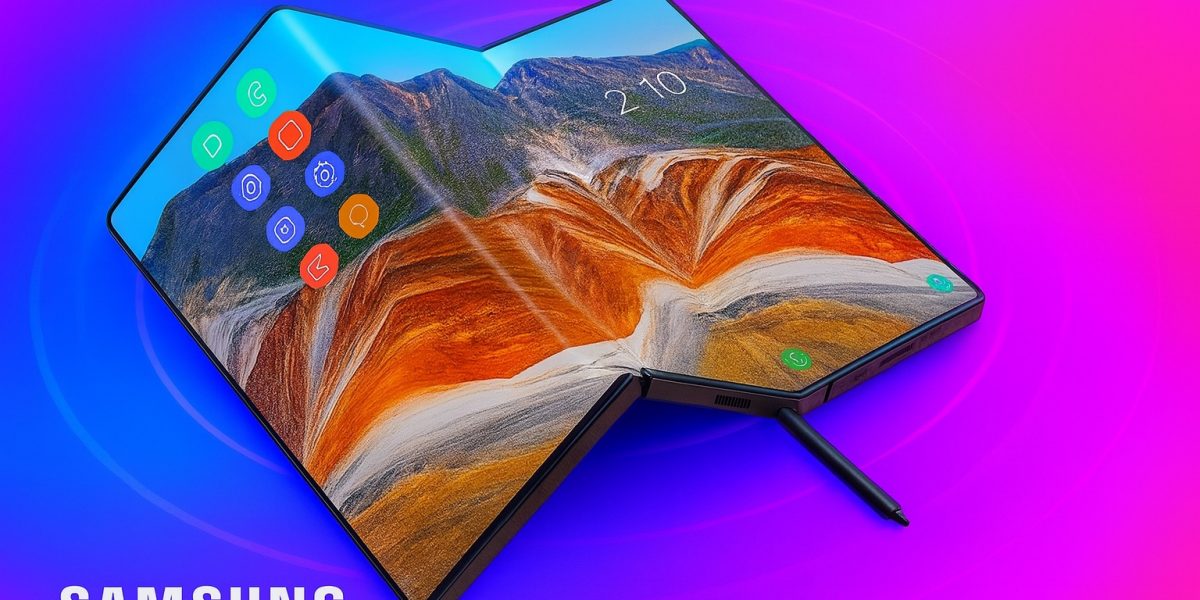
Samsung Electronics plans to showcase its innovative triple-folding smartphone at the Asia-Pacific Economic Cooperation summit in Gyeongju, South Korea this week, marking a significant moment in the company’s efforts to reclaim leadership in the rapidly evolving foldable phone market.
The device, tentatively called Galaxy Z TriFold, will be presented at a technology exhibition during the APEC summit on October 31 and November 1, according to multiple industry sources. The smartphone features a revolutionary dual-hinge design that allows it to fold inward in a G-shape, offering a 6.5-inch outer display that expands to a massive 10-inch main screen when fully unfolded.
This represents a substantial leap from Samsung’s current foldable offerings. Where the Galaxy Z Fold series provides tablet-like experiences through a single fold, the TriFold essentially creates a laptop-sized workspace in your pocket. The engineering required to make three panels fold reliably while maintaining display quality presents formidable technical challenges.

Deliberately Limited Market Strategy
The device will have extremely limited availability, launching only in select Asian markets including South Korea, China, Taiwan, Singapore, and possibly the UAE. Reliable insider Evan Blass stated that Samsung is “extremely unlikely” to release the tri-fold outside these regions, contradicting earlier rumors about a potential US launch.
Samsung plans to produce just 50,000 to 200,000 units initially, with the device expected to cost around $2,800—approximately $1,000 more than the current Galaxy Z Fold 7. This cautious approach reflects the company’s strategy of testing market demand for the premium form factor before committing to broader production.
The pricing positions the TriFold firmly in ultra-premium territory, competing more with luxury devices than mainstream smartphones. At nearly three times the cost of flagship non-folding phones, Samsung is targeting early adopters and technology enthusiasts rather than general consumers. Whether that audience exists in sufficient numbers to justify the device remains an open question.
Fighting for Position in a Shifting Market
The launch occurs against intensifying competition for Samsung in the foldable device market. According to Counterpoint Research data, Samsung’s share of the global foldable market fell to just 9% in Q2 2025, trailing Huawei at 45% and Motorola at 28%. This represents a significant decline from Samsung’s 21% share in Q2 2024.
The market shift highlights how quickly Samsung’s first-mover advantage in foldables has evaporated. While the company pioneered mainstream foldable phones with the original Galaxy Fold in 2019, competitors have aggressively iterated on the concept. Huawei’s dominance in China, the world’s largest smartphone market, particularly impacts Samsung’s overall numbers.
Motorola’s success proves that innovation beyond just screen size matters. The company’s Razr series tapped into nostalgia while offering practical clamshell designs at increasingly accessible price points. Samsung’s TriFold represents a different bet—that some users want maximum screen real estate regardless of cost or complexity.
Technical Specifications and Capabilities
Industry analysts view the tri-fold showcase as more about “strategic symbolism and brand positioning rather than large-scale sales.” The device runs on Qualcomm’s Snapdragon 8 Elite chipset and features a 200-megapixel main camera with 100x zoom capability.
The camera specifications suggest Samsung isn’t compromising on imaging despite the complex folding mechanism. Integrating high-end camera modules into a device with multiple hinges and panels requires careful engineering to maintain optical performance while managing heat dissipation and structural integrity.
The Snapdragon 8 Elite chipset provides the computational power necessary to drive that enormous 10-inch display while managing the thermal challenges inherent in thin, multi-panel devices. Qualcomm’s latest flagship processor includes enhanced AI capabilities that could enable new use cases specific to the tri-fold format, though Samsung hasn’t detailed software features yet.
Strategic Positioning Ahead of Apple’s Entry
With Apple reportedly planning to release its first foldable iPhone in 2026, Samsung’s early entry into the tri-fold segment represents an attempt to establish technological leadership in the next generation of foldable devices.
Apple’s eventual entry into foldables will fundamentally reshape the market. When the world’s most valuable company validates a technology category, mainstream adoption typically follows. Samsung’s aggressive push with increasingly complex folding designs positions the company to own the “innovation leader” narrative even after Apple enters.
The timing also creates a dilemma for potential buyers. Those interested in foldable technology must decide whether to invest in Samsung’s current offerings or wait for Apple’s interpretation. By showcasing the TriFold now, Samsung demonstrates continued innovation momentum that might sway some buyers away from waiting.
Practical Questions About Real-World Usage
Beyond the impressive engineering, questions remain about how users will actually interact with a triple-folding device. The added complexity of two hinges introduces more potential failure points compared to single-fold designs. Samsung’s durability testing will be crucial for building confidence in the format.
The device’s portability represents another consideration. While it unfolds to a large display, the folded thickness of three panels plus two hinge mechanisms makes it considerably bulkier than traditional smartphones or even current foldables. Users must decide whether the expanded screen real estate justifies carrying a thicker device.
Software optimization will largely determine whether the TriFold delivers genuine utility or just novelty. Samsung needs compelling use cases that leverage the unique form factor—perhaps advanced multitasking with three apps visible simultaneously, or creative workflows that benefit from the expansive canvas.
The Samsung Galaxy Z TriFold’s appearance at APEC represents both technological achievement and market positioning. Whether it revitalizes Samsung’s foldable fortunes or remains a limited-edition curiosity depends on execution, pricing strategy for future iterations, and ultimately whether consumers see value in increasingly complex folding mechanisms.

Post a comment